Does Acclimatisation Really Prevent Altitude Sickness on Climbs?
Yes. Acclimatisation, giving your body time to adjust to thinner air, is the single most effective way to prevent altitude sickness on a climb. The higher you go, the thinner the air gets, and that’s the whole story behind altitude sickness. It’s also why prevention comes down to one thing more than any other: giving your body time to catch up. Get that right, and a high-altitude trek goes from a risky gamble to a genuinely incredible experience. Get it wrong, and even strong, experienced climbers can end up turning back early. Here’s what actually works on the trail, what doesn’t, and the warning signs that mean it’s time to stop climbing and start descending.
What is altitude sickness?
As you gain elevation, the air pressure drops. The oxygen is still there, roughly the same 21% as at sea level, but the molecules are spread further apart. So every breath pulls in less oxygen than your body is used to. Your lungs and blood notice immediately. If you climb faster than your body can adjust, that oxygen shortfall turns into altitude sickness. It doesn’t matter how fit you are or how many peaks you’ve bagged before. Altitude sickness can hit anyone. The single biggest factor isn’t your training. It’s your pace.
What are AMS, HAPE and HACE?
Altitude illness shows up in three stages, and they’re worth knowing by name before you set foot on the trail.
AMS: the mountain’s early warning sign
Acute Mountain Sickness (AMS) is the most common form, and it feels a lot like a rough hangover. Headache, fatigue, nausea, dizziness, poor appetite, restless sleep, usually within 6 to 24 hours of reaching a new altitude. Think of it as your body waving a flag, not raising an alarm. But it’s a flag worth respecting.
HAPE: when your lungs can’t keep up
High Altitude Pulmonary Oedema (HAPE) means fluid is building up in the lungs. This one is serious. Watch for breathlessness even at rest, a cough that won’t quit (sometimes bringing up frothy or pink-tinged fluid), tight chest, and bluish lips or fingertips.
HACE: the most dangerous stage
High Altitude Cerebral Oedema (HACE) happens when fluid affects the brain. The telltale sign is ataxia (stumbling like you’ve had one too many drinks) along with confusion and, in severe cases, loss of consciousness.
HAPE and HACE are medical emergencies. Both demand immediate descent and urgent medical care. Neither is something to sleep off.
How does acclimatisation prevent altitude sickness?
Yes. Acclimatisation is the single most effective method for reducing the risk of altitude sickness.
Give your body enough time, and it adapts to thin air surprisingly well. You’ll start breathing faster and deeper, even while asleep. Your blood quietly thickens with extra oxygen-carrying cells over several days. New tiny blood vessels form to get oxygen to your muscles faster. Your cells even get better at using the oxygen that is available.
None of this happens overnight. That’s the whole reason altitude sickness prevention is really a pacing problem, not a fitness problem.
Acclimatisation lowers your risk dramatically, but it’s not a guarantee. Everyone adapts differently, and even a climber who’s handled altitude well before can still get caught out on a different trip. Still, the pattern holds: most altitude sickness comes from climbing faster than the body can adjust, not from bad luck.
What altitude sickness prevention methods actually work?
Skip the gadgets and miracle supplements. These are the methods mountain guides and expedition doctors actually rely on.
How much altitude can you safely gain each day?
The number that matters most isn’t your daytime altitude. It’s where you sleep. Most of your body’s adaptation happens overnight, so the gain between last night’s camp and tonight’s is what counts.
Above roughly 3,000 metres, aim to gain no more than 300 to 500 metres of sleeping altitude per night, whenever the route allows it. Itineraries built around this rule report far fewer cases of AMS.
What does “climb high, sleep low” mean?
This is a trail classic for good reason. Hike up to a higher point during the day, then head back down to sleep. You get a short, useful dose of thin air that kickstarts acclimatisation, then you recover overnight, when the air is a little richer. Plenty of expedition itineraries build entire acclimatisation days around exactly this loop.
How often do you need rest days at altitude?
Don’t book or accept an itinerary that climbs every single day. Most high-altitude routes schedule a rest day for roughly every 600 to 900 metres of elevation gained. A rest day doesn’t mean sitting still; a short walk up and back down works just as well. These pauses are easy to skip on paper and easy to regret on the trail.
How much water should you drink to prevent altitude sickness?
You lose more fluid at altitude through faster breathing and dry air, so drink regularly. Aim for something like 3 to 4 litres a day for most trekkers. But more isn’t automatically better. Overdoing it can dilute your blood sodium and cause symptoms that look a lot like AMS. Hydration helps; it doesn’t replace acclimatisation.
Pace yourself, too. If you can’t hold a conversation without gasping, you’re moving too fast. And leave the celebratory beer for lower ground. Alcohol dehydrates you, wrecks your sleep, and can mask the early signs of AMS right when you need to notice them.
When should you take Diamox (acetazolamide) for altitude sickness?
Acetazolamide (better known as Diamox) helps your body acclimatise faster by changing your breathing pattern, including overnight. It’s especially useful if you have a history of AMS or if your trip genuinely doesn’t allow for a gradual climb, such as flying straight into a high-altitude city.
It’s a helper, not a free pass. Even on medication, stick to a sensible pace rather than using it as an excuse to climb faster. Talk to a doctor before you go, especially if you have any existing health conditions.
What are the warning signs of altitude sickness?
The safest rule in the mountains: treat any unexplained illness as altitude sickness until you know otherwise.
Symptoms
Severity
What to do
Mild headache, fatigue, low appetite, restless sleep
Mild AMS
Stop climbing higher, rest, hydrate, and wait for symptoms to fully clear
Headache with nausea, dizziness, or vomiting
Moderate AMS
Stop ascending now; descend if it hasn’t improved within 24 hours
Persistent vomiting, severe headache that won’t ease, trouble walking straight
Severe AMS
Descend at least 500-1,000m right away and get checked by a doctor
Confusion, hallucinations, stumbling (ataxia)
HACE, emergency
Descend immediately, give oxygen if you have it, and seek urgent care
Breathless at rest, persistent cough, blue-tinged lips
HAPE, emergency
Descend immediately, give oxygen if you have it, and seek urgent care
If symptoms are getting worse, going higher is never the answer.
How do guided expeditions build acclimatisation into the itinerary?
Good guides don’t leave acclimatisation to chance. They build it straight into the route: shorter early days, deliberate acclimatisation hikes, rest days placed exactly where the body needs them most.
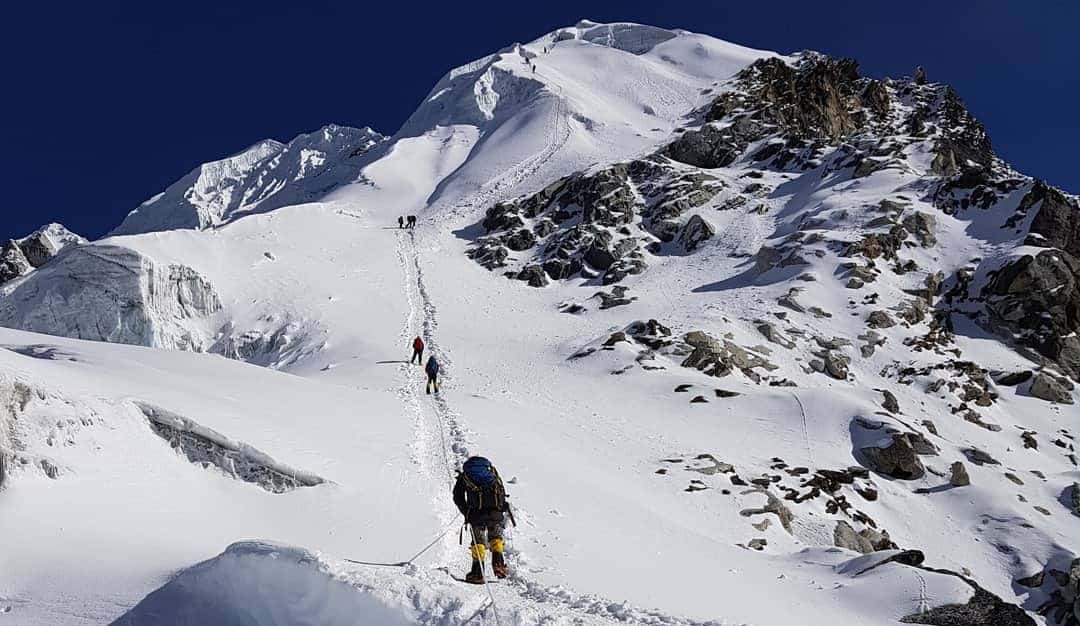
That’s why a well-designed trip up somewhere like Kilimanjaro or to Everest Base Camp rarely rushes toward the summit. Slower isn’t a compromise. It’s the strategy.
If you are planning a high-altitude adventure, explore our Mountaineering activities for preparation advice, training resources, and expedition options. You can also review one of our dedicated high-altitude trekking and climbing itineraries to see how acclimatisation is incorporated into real-world expedition planning.
Frequently Asked Questions
Does acclimatisation really prevent altitude sickness on climbs?
Yes. A slow, steady climb paired with planned rest days is the most effective altitude sickness prevention strategy there is. It lowers risk dramatically, though it can’t promise zero risk.
What altitude sickness prevention methods actually work?
A slow ascent rate, climbing high and sleeping low, scheduled rest days, smart hydration and pacing, skipping alcohol, and medication like acetazolamide when a doctor recommends it.
How long does acclimatisation take?
Days, not hours. A good rule of thumb is one rest day for every 600 to 900 metres of sleeping-altitude gain once you’re high enough for it to matter.
Can you still get altitude sickness if you are fit?
Yes. Fitness makes the hiking easier, but it doesn’t change how fast your blood and lungs adapt. Even elite athletes get AMS if they climb too quickly.
At what altitude does altitude sickness usually start?
Most guidance points to around 2,500 metres, though sensitive climbers can feel it as low as 2,000 metres, especially after a fast ascent, like flying straight into a high-altitude city.
What's the difference between AMS, HAPE and HACE?
AMS is the mild, common, early-stage headache and fatigue that clears with rest. HAPE is fluid building up in the lungs; HACE is fluid affecting the brain. Both HAPE and HACE are medical emergencies that need immediate descent and urgent care, not rest.
Does drinking more water prevent altitude sickness?
No. Staying hydrated supports acclimatisation, but it can’t replace it. Drinking far more than 3 to 4 litres a day can actually dilute blood sodium and cause symptoms that mimic AMS, so more water isn’t automatically safer.
Do I need to take Diamox (acetazolamide) on every high-altitude trek?
Not necessarily. It’s most useful if you have a history of AMS or your itinerary doesn’t allow a gradual ascent. It’s a helper, not a substitute for a sensible pace, and should be discussed with a doctor before you travel.
How quickly do altitude sickness symptoms improve after descending?
Mild AMS symptoms often ease within hours of descending a few hundred metres. Moderate to severe cases can take a day or more, and HAPE or HACE need urgent medical care in addition to descent, not descent alone.