The best time for hiking in Armenia is from mid-spring to mid-autumn (May to October), when mountain trails are clear, alpine meadows are in bloom and weather conditions are most stable.
If you’re considering trekking in Armenia for the first time, timing your trip well will shape your entire experience. You can immerse yourself in anything from wildflower-strewn ridgelines to golden valleys beneath ancient monasteries.
Armenia may be a small country, but it offers a diverse landscape of rugged mountains, sweeping valleys, dense forests and remote villages that feel untouched by time. With Climbing Mountains leading the way, there has never been a better time to explore this excellent hiking territory with experienced guides who understand both the terrain and its unique cultural heritage.
Understanding Armenia’s Climate and Terrain
Armenia has a continental climate with four distinct seasons. Summers are typically dry and sunny from June to mid-September, while winters are cold with significant snow in the high mountains.
Altitude plays a defining role in hiking in Armenia. The Ararat Valley sits at lower elevation with warmer temperatures, whereas peaks like Mount Aragats (the highest point in the country) experience rapidly changing weather conditions and lingering snow well into late spring.
In practical terms:
- Low valleys and gorges warm early in spring and remain accessible longer into autumn.
- High-altitude mountain routes (above 2,500m) are generally best from May to September.
- Snowfall during winter months can close passes such as Selim Pass and make trails in the Gegham Mountains challenging without specialist equipment.
Understanding this vertical diversity is key to planning your Armenia hiking adventure.
Spring (April–June): Wildflowers and Fresh Mountain Air
We find spring to be one of the most rewarding times for trekking in Armenia, particularly at lower altitudes. As temperatures rise, alpine meadows burst into bloom and sweeping valleys turn vibrant green. In regions such as Vayots Dzor and the Yeghegis Valley, hikers pass medieval churches and striking monasteries framed by dramatic mountain backdrops.
Why choose spring?
- Mild daytime temperatures
- Fewer crowds
- Lush natural landscapes
- Ideal for day hikes and cultural routes
Best for:
- Dilijan National Park
- Yeghegis Valley
- Kasagh Gorge
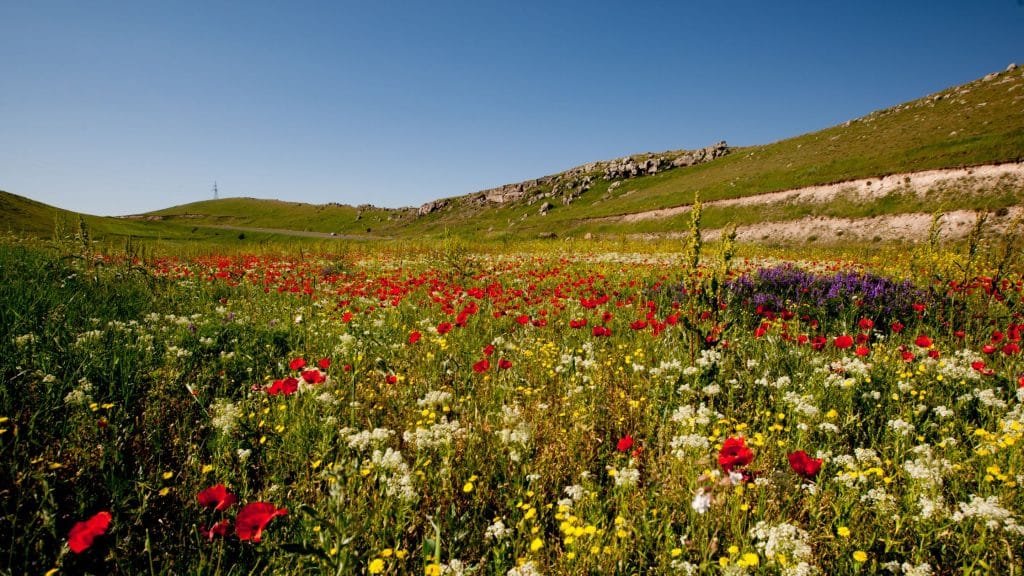
In Dilijan National Park, often called the “Armenian Switzerland”, dense forests surround Lake Parz and quiet monastery trails. Spring rainfall is common, so waterproof layers and careful planning are essential. Higher peaks such as the southern and western peaks of Mount Aragats may still hold snow.
Summer(June–mid-September): High Peaks and Long Days
For many hikers, summer is the best season for hiking in Armenia’s high mountains. The dry conditions and long daylight hours make it the prime period for tackling exposed ridgelines and extinct volcanoes in the Gegham Mountains. The Transcaucasian Trail route is typically hikeable from mid-May to mid-October, offering options from short segments to ambitious thru hike itineraries connecting Armenia and Georgia.
Why choose summer?
- Clear skies and stable weather
- Access to high-altitude peaks
- Extended daylight for longer trekking tours
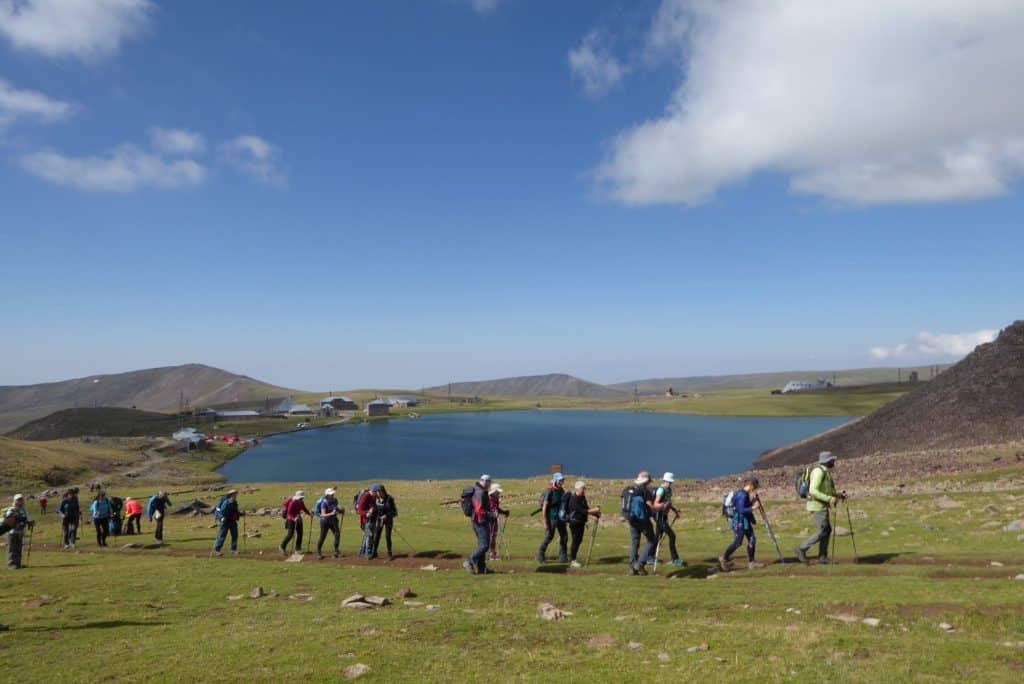
Lake Kari, perched high on Aragats, becomes a base for summit attempts. In lowland areas like the Ararat Valley and Syunik region, temperatures can be hot, so early starts, hydration and sun protection are essential. Summer also opens access to Lake Sevan and Lake Arpi, where alpine routes combine mineral springs, volcanic landscapes and sweeping valley views.
Autumn (mid-September–November): Golden Valleys and Quiet Trails
Autumn brings a different magic to Armenia hiking. Temperatures begin falling from late September, but days remain comfortable for trekking in Armenia through October. Forests in Dilijan National Park turn amber and crimson, while harvest season fills remote villages with fresh produce and local hospitality.
Why choose autumn?
- Mild hiking temperatures
- Fewer trekkers on popular routes
- Stunning foliage in forested regions
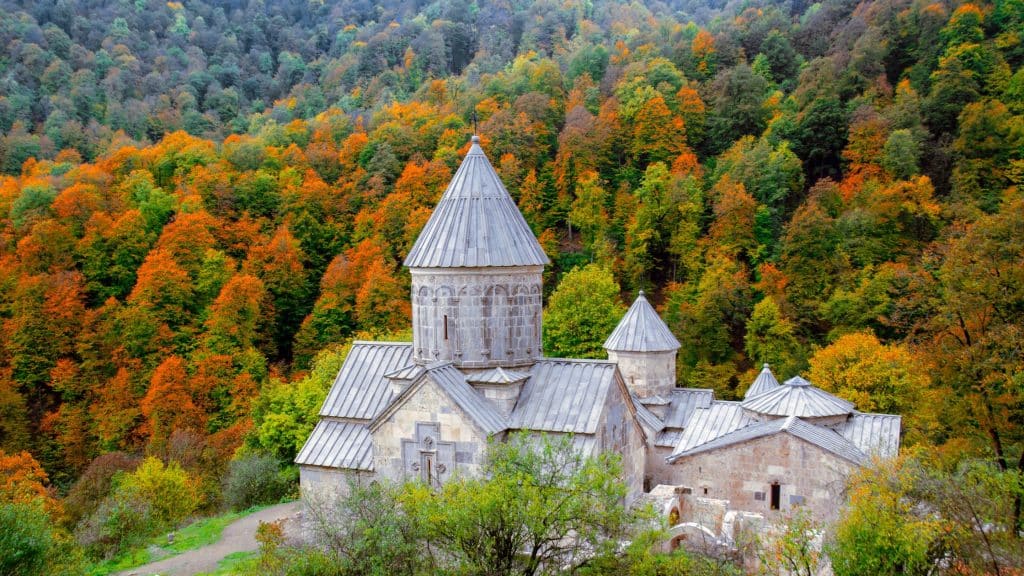
Higher peaks in the Gegham Mountains and Mount Aragats can see early snowfall from late October, so hikers should monitor weather conditions closely. For many travellers, autumn strikes the perfect balance between accessibility and tranquillity.
Winter (December–March): For Experienced Adventurers
Winter transforms Armenia’s rugged mountains into a snow-covered landscape of frozen lakes and silent valleys. However, trekking Armenia during winter months requires specialist equipment, snow awareness and strong navigation skills. Trails may be obscured, and mountain passes can close.
For most travellers, winter is better suited to:
- Snowshoeing with guides
- Cultural exploration of historical monuments
- Visiting Amberd Fortress beneath snow-capped peaks
It’s a niche season best reserved for experienced hikers seeking a self-sufficient alpine challenge.
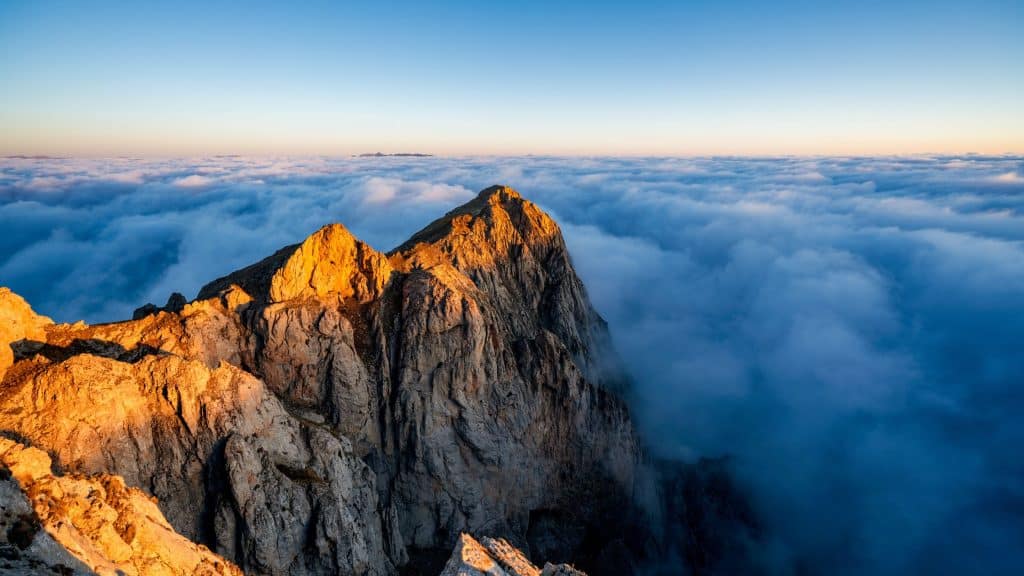
Top Trails for Hiking in Armenia
Armenia’s hiking routes combine natural landscapes with remarkable historical monuments along ancient Silk Road corridors.
The Transcaucasian Trail(Armenia Section)
The Transcaucasian Trail route stretches 827km across Armenia and Georgia. The Armenian section passes through remote villages, sweeping valleys and dramatic ridgelines. It can be completed in sections or as part of a longer thru hike route.
Dilijan National Park
A popular destination for those new to hiking in Armenia, Dilijan National Park offers forest trails, Lake Parz and monastery routes in a relatively mild climate. It’s ideal for spring and autumn day hikes.
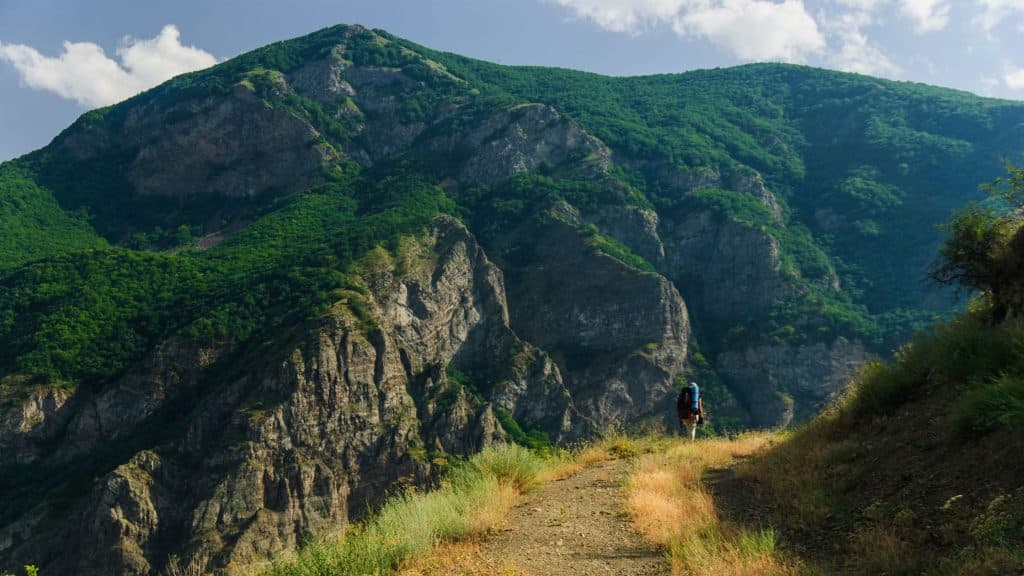
Gegham Mountains & Mount Aragats
Home to extinct volcanoes and Armenia’s highest point, this region offers alpine meadows, volcanic ridges and views towards Mount Ararat. Lake Kari provides a staging point for summiting one of Aragats’ four peaks.
Kasagh Gorge& Yeghegis Valley
These lower-altitude regions combine picturesque canyon scenery with medieval churches, Smbataberd Fortress and vineyard-lined valleys in Armenia’s Vayots Dzor province. Ideal for culturally immersive trekking tours.
Planning and Safety Tips for Trekking in Armenia
Regardless of the best season you choose:
- Pack layered clothing for rapid altitude shifts
- Carry waterproof gear
- Use trekking poles on rocky or steep routes
- Stay hydrated
- Check weather conditions before entering high mountains
- Respect Leave No Trace principles
While wild camping is possible in some areas, travelling with local guides improves safety, supports communities and enriches your understanding of Armenia’s unique cultural heritage.
Why Trek with Climbing Mountains?
Climbing Mountains’ itinerary is designed for travellers who want more than just a trail map.
You’ll trek through remote villages, visit ancient monasteries, and summit spectacular peaks whilst supported by experienced guides who manage logistics, accommodation and safety. Small group sizes foster connection, while a commitment to responsible adventure travel ensures minimal environmental impact.
Rather than navigating complex route planning or unpredictable altitude changes alone, you can focus on the journey itself. Here you can take in the sweeping valleys, the mountain air, the stories shared around the table in a quiet resort town at day’s end.
Ready to Experience Hiking in Armenia?
The best time for hiking in Armenia is approaching quickly, and prime departures from May to September fill early.
If you’re ready to explore stunning mountains, medieval churches and ancient Silk Road landscapes, discover more about our Armenia trek and secure your place today.
Book now or speak with our team to plan your Armenia hiking adventure.