How fit do I need to be for mountaineering expeditions?
How to build the endurance, strength, and mental grit you need to safely reach Himalayan summits and beyond.
Ask any seasoned alpinist what separates a successful summit push from a forced retreat at high camp, and the answer rarely starts with technical skill. It starts with fitness. Mountaineering is often called an endurance sport disguised as an extreme sport, and if you’re planning a high-altitude expedition, the question that should dominate your preparation is simple: how fit do I actually need to be?
The short answer: you need elite-level cardiovascular endurance, serious functional leg and core strength, and the mental resilience to grind through long, uncomfortable days on the mountain. Standard gym fitness rarely covers it. Whether you’re transitioning from trekking the Everest Base Camp trail to a technical glaciated climb, or wondering whether beginners can really tackle a Himalayan peak, this guide walks through exactly how to prepare your body and your mind for the demands of high-altitude mountaineering.
What level of fitness do you need for a mountaineering expedition?
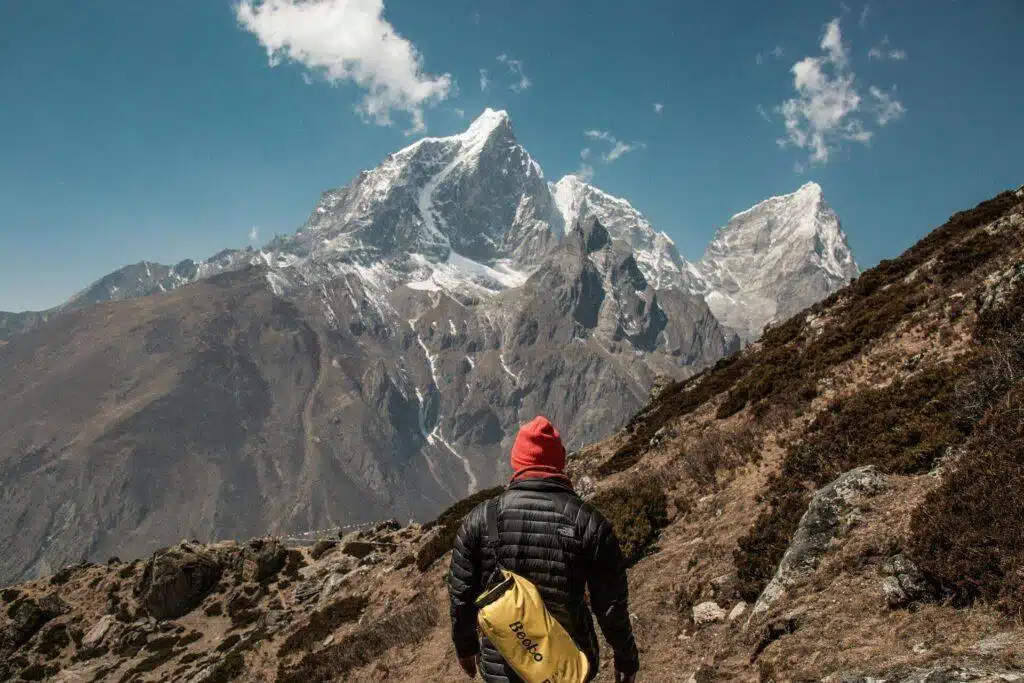
Unlike a marathon, where you sprint flat-out for a few hours, mountaineering asks you to operate at moderate-to-high intensity for eight to fourteen hours a day, often for multiple days in a row, while hauling a loaded pack through a low-oxygen, high-altitude environment. Exactly how fit you need to be depends on your objective: a non-technical trekking peak demands far less than a glaciated climb above 5,000 metres with ropes and crampons. But for any genuine mountaineering expedition, “good enough” fitness simply isn’t good enough.
- Hike continuously for 8+ hours carrying a 15 to 20 kg (33 to 44 lb) pack
- Ascend 1,000 vertical metres (3,200 feet) in under three hours with a loaded pack
- Wake up the next morning and repeat that exact output, without debilitating soreness
Why is fitness a safety margin on the mountain?
Fitness isn’t just about reaching the summit; it’s your reserve tank. If the weather turns violently or a teammate gets injured, you need energy left over to retreat quickly and safely. The majority of mountaineering accidents happen on the descent, exactly when climbers who maxed out their effort on the way up have nothing left.
How is mountaineering fitness different from regular gym fitness?
Traditional fitness programs chase aesthetics, short bursts of effort, or one-rep maxes. Mountaineering fitness rests on a different foundation entirely, built on four pillars that matter far more on a mountain than in a mirror:
- Aerobic Endurance: most of a mountain day is spent at moderate intensity; a strong aerobic engine lets you move efficiently for hours without blowing up
- Muscular Endurance: your legs need to fire through thousands of consecutive steps, not survive a single heavy lift; train for repetition, not maximum weight
- Recovery Capacity: expeditions stack demanding days back-to-back; how well your body bounces back overnight matters as much as how hard you push during the das
- Mental Resilience: cold, fatigue, bad weather, and discomfort all chip away at motivation; consistent training builds the grit to keep moving when the climb turns ugly
Is trekking fitness enough for mountaineering?
It’s easy to lump trekking and mountaineering together, but they place very different demands on your body. Trekking routes like the Everest Base Camp trek or the Tour du Mont Blanc generally follow established trails with a lightweight daypack, while porters or pack animals haul the heavy gear. Mountaineering adds a much harsher set of variables.
FACTOR
TREKKING
MOUNTAINEERING
Terrain
Established trails and well-marked paths
Steep snow, scree fields, glacier ice, and exposed ridgelines
Pack weight
Light daypack; porters or animals carry the heavy load
Heavy pack with rope, crampons, ice axe, and cold-weather gear
Skills required
General hiking fitness and trail navigation
Crampon technique, self-arrest, rope work, glacier travel
Typical altitude
Often below 5,000 to 5,500 m
Frequently above 5,000 to 6,000+ m, into thin-air terrain
Daily output
10 to 15 km per day on established trail
8 to 14 hours on mixed terrain, often at a deliberately slow pace
Many trekkers transition successfully into mountaineering, but only by layering technical skill and heavier load-carrying capacity onto an already solid trekking-fitness base. The two are related, but they are not interchangeable.
How do I train for a high-altitude mountaineering expedition?
You cannot cram for a mountain. A proper training plan is systematic, progressive, and should begin at least 16 to 24 weeks (four to six months) before your departure date. If you’re starting from a largely sedentary baseline, give yourself nine to twelve months instead, so your tendons and joints can adapt safely before you start loading on weight. The most effective plans break down into three distinct phases
How do you build an aerobic base for mountaineering? (Weeks 1 to 8)
The foundation of all high-altitude training is your aerobic base. At elevation, your body leans heavily on its aerobic energy system, so the more efficient your heart and lungs are at delivering oxygenated blood to your muscles, the better you’ll perform when oxygen becomes scarce.
- Zone 1/Zone 2 cardio: roughly 80% of your training should be low-intensity, steady-state work; hike, run, or cycle at a pace where you can comfortably hold a conversation
- Volume: aim for 4 to 6 hours of cardiovascular training per week, mixing hiking, trail running, cycling, rowing, stair climbing, and fast-paced walking
- Strength: two sessions a week of squats, deadlifts, lunges, and core work to prepare joints and tendons for the heavier loads ahead
How do you train for load carrying and vertical gain? (Weeks 9 to 16)
Once your aerobic engine is built, it’s time to develop the muscular endurance required to haul real gear up steep, unforgiving terrain.
- Weighted pack carries: the single most effective mountaineering exercise. Load a backpack with water jugs (you can dump the water at the top to spare your knees on the way down), and hike steep local hills, starting around 10 kg (22 lb) and building toward your target expedition weight of 15 to 20 kg
- Vertical-gain training: stadium stairs, hill repeats, or an incline treadmill for 45 to 90 minutes if you don’t live near real elevation gain; it’s monotonous, but it builds exactly the quad and glute endurance steep snow climbing demands
- Muscular-endurance circuits: shift your lifting from heavy/low-rep to lighter/high-rep work, such as 3 sets of 20 to 25 reps for lunges and squats, plus single-leg stability drills, to mimic the repetitive stress of a long climbing day
How should you train in the final weeks before an expedition? (Weeks 17 to 24)
In the final stretch, your training should closely mirror the actual rhythm of your expedition.
- Back-to-back long days: schedule a heavy-weighted hike on Saturday followed by another long hike or trail run on Sunday, training your body and mind to wake up tired and perform anyway
- Altitude exposure (optional): hypoxic masks and altitude tents have limited real-world value; if you can manage a weekend trip to a peak above 3,000 m (10,000 ft), real elevation will teach your body far more than any simulator
- Taper: two weeks before departure, cut your training volume drastically. You won’t gain meaningful new fitness in the final 14 days, but pushing through fatigue here can easily leave you injured or overtrained on arrival
What are the most common training mistakes climbers make?
Even motivated climbers undercut months of hard work with a handful of avoidable mistakes:
- Chasing gym strength alone: strong legs help, but endurance carries you up the mountain, not a heavy squat max
- Skipping hiking-specific training: months of gym work mean little if you rarely train on your feet, on real terrain, with a loaded pack
- Ramping volume too fast: sudden jumps in training load are one of the most common causes of pre-expedition injury; consistency beats intensity
- Neglecting recovery: fitness gains happen during rest and recovery, not during the workout itself
- Waiting until the last minute: the strongest mountaineering plans are built gradually, over months, never crammed into weeks
Does fitness prevent altitude sickness?
It’s one of the most important distinctions in mountaineering, and one of the most commonly misunderstood: excellent fitness does not prevent altitude sickness. Acclimatisation, giving your body time to adapt to lower oxygen levels through a slow ascent profile, scheduled rest days, and the classic “climb high, sleep low” rhythm, is what protects you at altitude. Fitness determines how well you perform once you’re acclimatised; acclimatisation determines whether you stay safe at all. The two support different things and should never be confused. For a full breakdown of how acclimatisation works on the trail, see our guide on how acclimatisation prevents altitude sickness.
Can beginners climb technical Himalayan peaks safely?
This is one of the most debated questions in the climbing community, and the honest answer is: yes, but only under specific conditions. The commercialisation of the Himalayas has opened technical summits to fit novices that were once reserved for elite alpinists. But “beginner” is relative; you can be entirely new to technical ice climbing while still needing serious experience with outdoor endurance, harsh weather, and basic wilderness judgment.
- Hire certified, experienced guides: crevasse rescue, avalanche assessment, and short-roping are not skills you learn from a video the night before a climb. Look for UIAGM/IFMGA-certified guides or seasoned local Sherpa teams who handle the technical risk management.
- Choose the right peak: skip Everest or Ama Dablam as a starting point. Entry-level Himalayan objectives like Island Peak (Imja Tse, 6,189 m) and Mera Peak (6,476 m) require crampons, ice axes, and fixed-line ascenders, but offer far more forgiving angles.
- Take a pre-trip skills course: a 3-to-5-day basic mountaineering course closer to home (the Rockies, the Alps, the Cascades) before you fly out. Learning to self-arrest and walk efficiently in crampons before you reach 6,000 m makes a dramatic difference in safety and enjoyment.
- Accept the pace: high-altitude safety depends on strict acclimatisation schedules, not ambition. Be willing to listen to your guides and turn around if your body isn’t adapting, no matter how fit you are.
Frequently Asked Questions
How fit do I need to be for mountaineering expeditions?
You need an elite level of endurance and functional strength: the ability to hike steep terrain for 8+ hours a day with a 15 to 20 kg pack, and recover quickly enough to repeat that effort for several consecutive days without injury.
How long does it take to train for a mountain climb?
Plan on a minimum of 16 to 24 weeks of structured training for a major high-altitude objective. If you’re starting from a sedentary lifestyle, allow 9 to 12 months to safely build joint and tendon strength before adding heavy load to your pack.
Is running good for mountaineering fitness?
Yes, especially hilly trail running, which builds aerobic capacity efficiently. But running alone isn’t enough; pair it with heavy pack carries and leg strength training, since running doesn’t replicate the load-bearing demands of climbing with a full expedition pack.
Is fitness for trekking enough for mountaineering?
Not always. Trekking fitness is a strong foundation, but mountaineering typically demands additional strength, technical skill, and experience carrying heavier loads over far more difficult terrain.
Does fitness prevent altitude sickness?
No. Fitness improves your performance at altitude, but it does not prevent altitude sickness. Proper acclimatisation remains essential, regardless of how fit you are.
Can beginners climb technical peaks in the Himalayas safely?
Yes, provided they’re genuinely fit, hire certified guides, choose an appropriate entry-level peak such as Island Peak or Mera Peak, and follow a conservative acclimatisation schedule. A pre-trip alpine skills course is highly recommended.
What is the best training for mountaineering?
A combination of aerobic endurance work, weighted hiking, functional leg strength, vertical-gain training like stair climbing, and progressive back-to-back long days in the months leading up to departure.
Ready for the Climb?
Every successful summit begins long before basecamp. The climbers who move efficiently, recover quickly, and still have energy in reserve on summit day aren’t necessarily the strongest in the gym; they’re the ones who trained deliberately, built their aerobic base early, and respected the mountain enough to prepare for it properly. Start now, train consistently, and the mountain will meet you halfway. Explore our high-altitude trekking and climbing itineraries to see how a real expedition build-up matches the training plan you’re working through.